Logseq
Privacy-first knowledge base with outliner and graph view
Replaces Roam Research, Notion, Coda
Who it's for
Capture daily notes, highlights, backlinks, and project thoughts in a local-first graph.
You need a shared workspace database for a large team.
Use outlines and backlinks to connect technical notes, tasks, and references over time.
You prefer visual whiteboards or document-first writing.
The problem
Team workspace tools are often too heavy for personal research, while plain notes can lose relationships between ideas. People who think in outlines, backlinks, and daily journals need a knowledge base that keeps notes local and connects ideas over time.
How it works
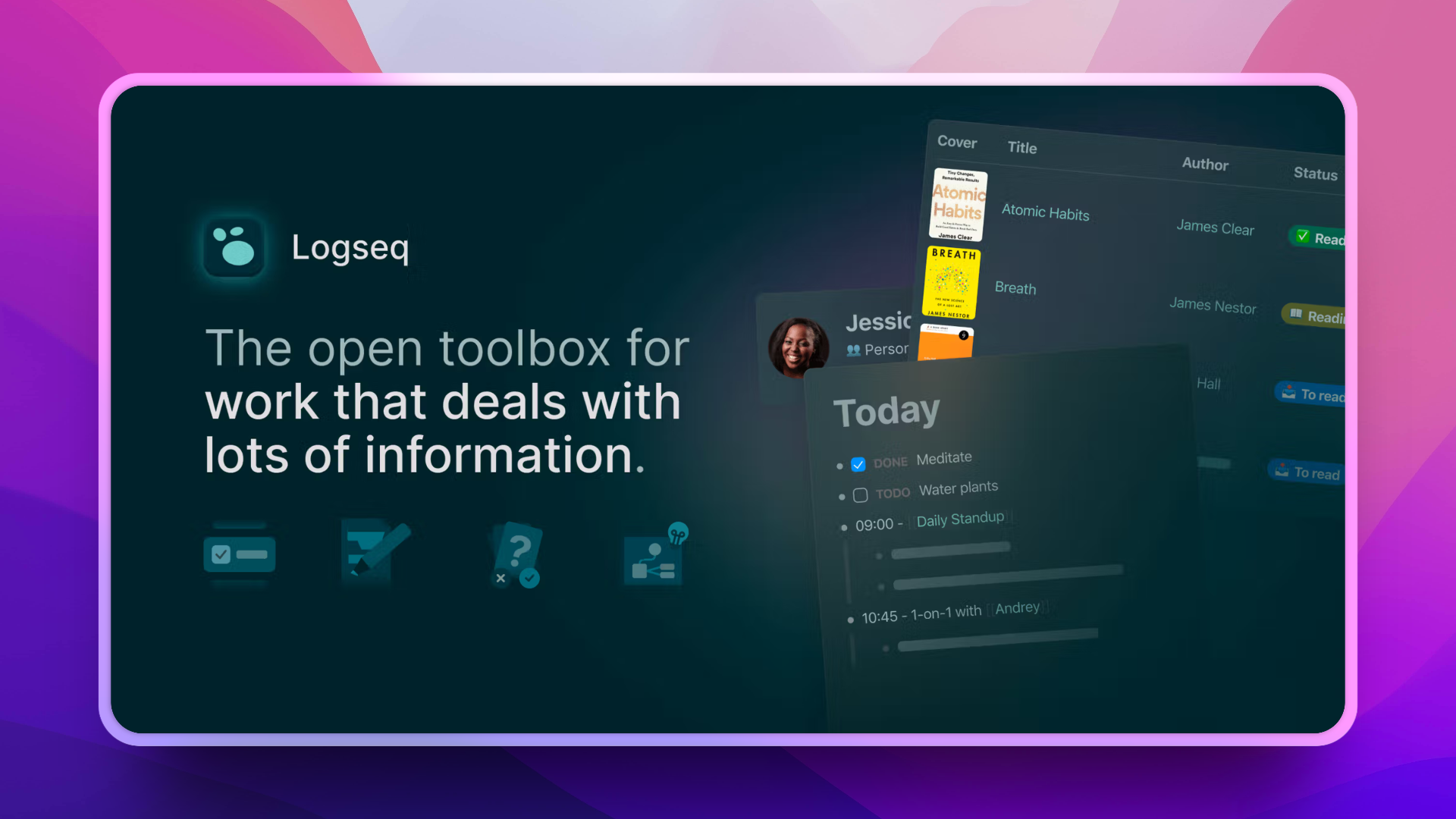
Logseq structures notes as linked blocks and outlines, which fits research journals, meeting notes, and incremental knowledge capture.
Users can keep their graph local instead of putting all notes into a hosted workspace database.
The README discusses DB graphs and real-time collaboration work, giving current users a path toward richer collaboration.
Features
- Outliner-first knowledge graph
- Local-first files
- Database graph and RTC direction
Recommended for this setup
Strengths
- Excellent for linked daily notes: Logseq’s outliner and backlinks make it strong for research logs, learning notes, and personal operating systems.
- More private than hosted workspaces: Local-first storage gives users more control than Notion-style hosted note databases.
Trade-offs
- Collaboration is less mature than Notion: Logseq’s collaboration story is still evolving, while Notion is polished for shared team workspaces.
- Outliner model is opinionated: Users who prefer freeform documents or database-heavy pages may not like Logseq’s block-first workflow.
Tech stack
FAQ
Logseq can replace Notion for personal knowledge management and linked notes. Notion remains stronger for shared databases and team collaboration.
Both use linked blocks and graph thinking, but Logseq is open source and local-first.
Yes. Logseq is designed around local-first graphs, with sync and collaboration features evolving separately.