
Nhost
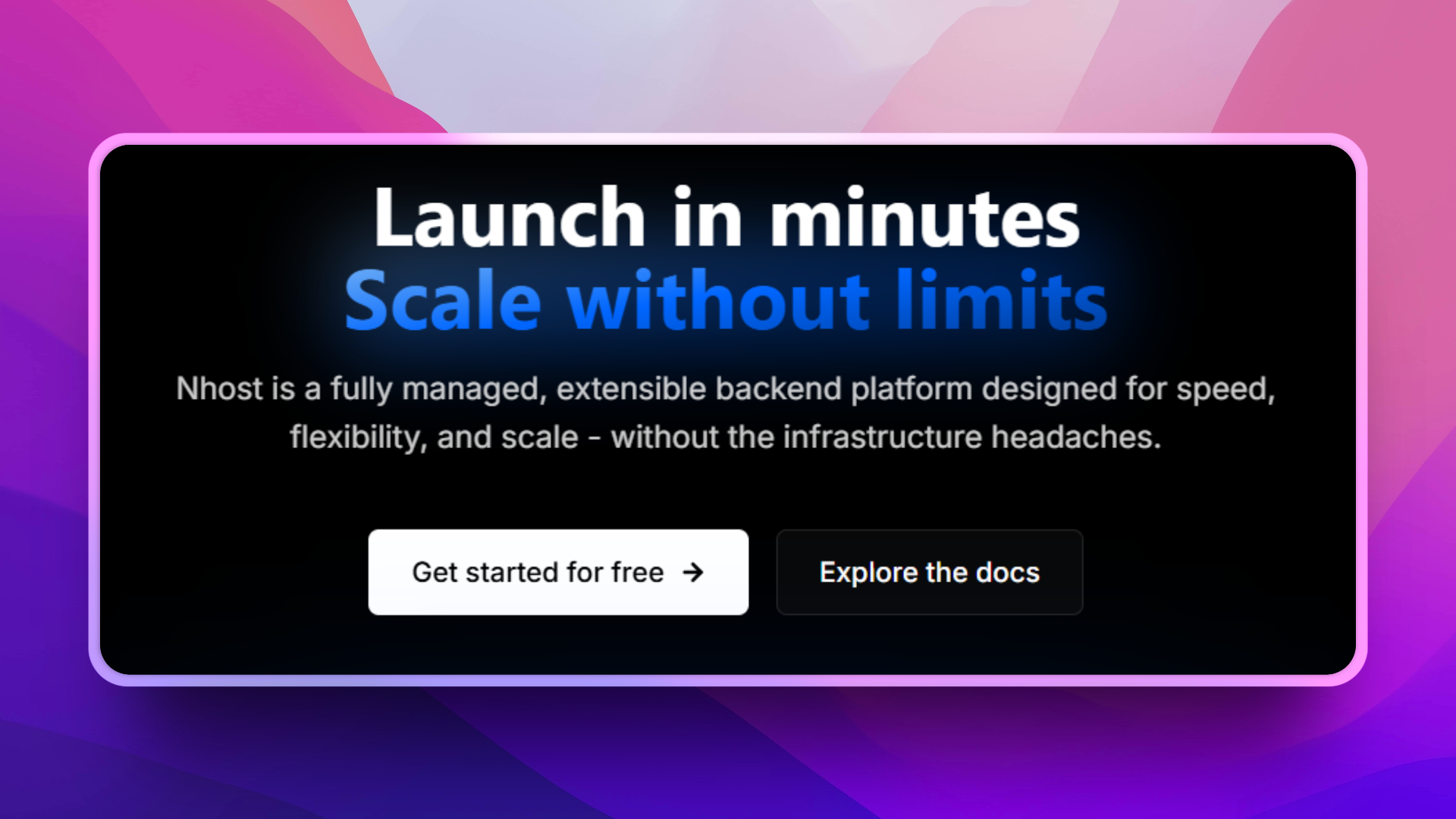
Firebase alternative: GraphQL, Postgres auth, and file storage
Replaces Firebase, Aws Amplify
Who it's for
Nhost fits applications that need auth, storage, serverless functions, and GraphQL without leaving SQL behind.
Skip if Firebase already meets your data model and hosting requirements.
Use Nhost when instant GraphQL over PostgreSQL is a core requirement for web or mobile product development.
Skip if your team prefers hand-written REST APIs and minimal platform dependencies.
The problem
Firebase is fast for prototypes, but teams can outgrow its document model, proprietary platform coupling, and limited portability. Applications that need relational data, GraphQL APIs, and self-hosting often rebuild backend primitives that a BaaS provided at the start.
How it works
Uses PostgreSQL as the database layer instead of a proprietary document database model.
Provides an instant GraphQL API through Hasura, which gives applications typed data access quickly.
Combines authentication, file storage, serverless functions, and a local development CLI in one backend platform.
Features
- PostgreSQL-backed backend
- Instant GraphQL with Hasura
- Auth, storage, functions, and CLI
Recommended for this setup
Strengths
- Firebase speed with SQL ownership: Nhost keeps the BaaS developer experience while anchoring data in PostgreSQL.
- Self-hostable stack: The README states the whole Nhost stack can be self-hosted and points to a Docker Compose example.
Trade-offs
- Stack complexity behind the convenience: Nhost combines PostgreSQL, Hasura, auth, storage, functions, and CLI tooling. Self-hosting requires understanding those moving parts.
Tech stack
FAQ
Yes. The README describes Nhost as an open source Firebase alternative with GraphQL and SQL.
Yes. The README says the full Nhost stack can be self-hosted and links to a Docker Compose example.
Nhost uses PostgreSQL and exposes instant GraphQL through Hasura.