
Amplication
Generate production-ready backends for platform engineers
Replaces Xano, Backendless, Convex
Who it's for
Amplication helps platform teams turn approved service architecture into repeatable generated projects. New services can start with expected database, API, and project conventions.
Skip it if your organization does not have enough repeated backend patterns to justify maintaining generators and templates.
Developers can use Amplication to start API services faster while keeping ownership of the generated code. This fits teams that need speed but cannot accept a black-box backend runtime.
Use Xano or Backendless if your team wants a hosted no-code backend and does not plan to maintain generated code.
The problem
Backend teams waste time rebuilding the same service foundations: authentication, database models, APIs, permissions, project layout, and deployment conventions. As teams grow, each new service drifts from the last one, which makes onboarding, security review, and maintenance harder.\u000A\u000ANo-code backend tools can speed up early prototypes, but they often limit code ownership and architecture choices. Larger engineering organizations usually need repeatable service generation that still produces real code developers can review, modify, and run in their own stack.
How it works
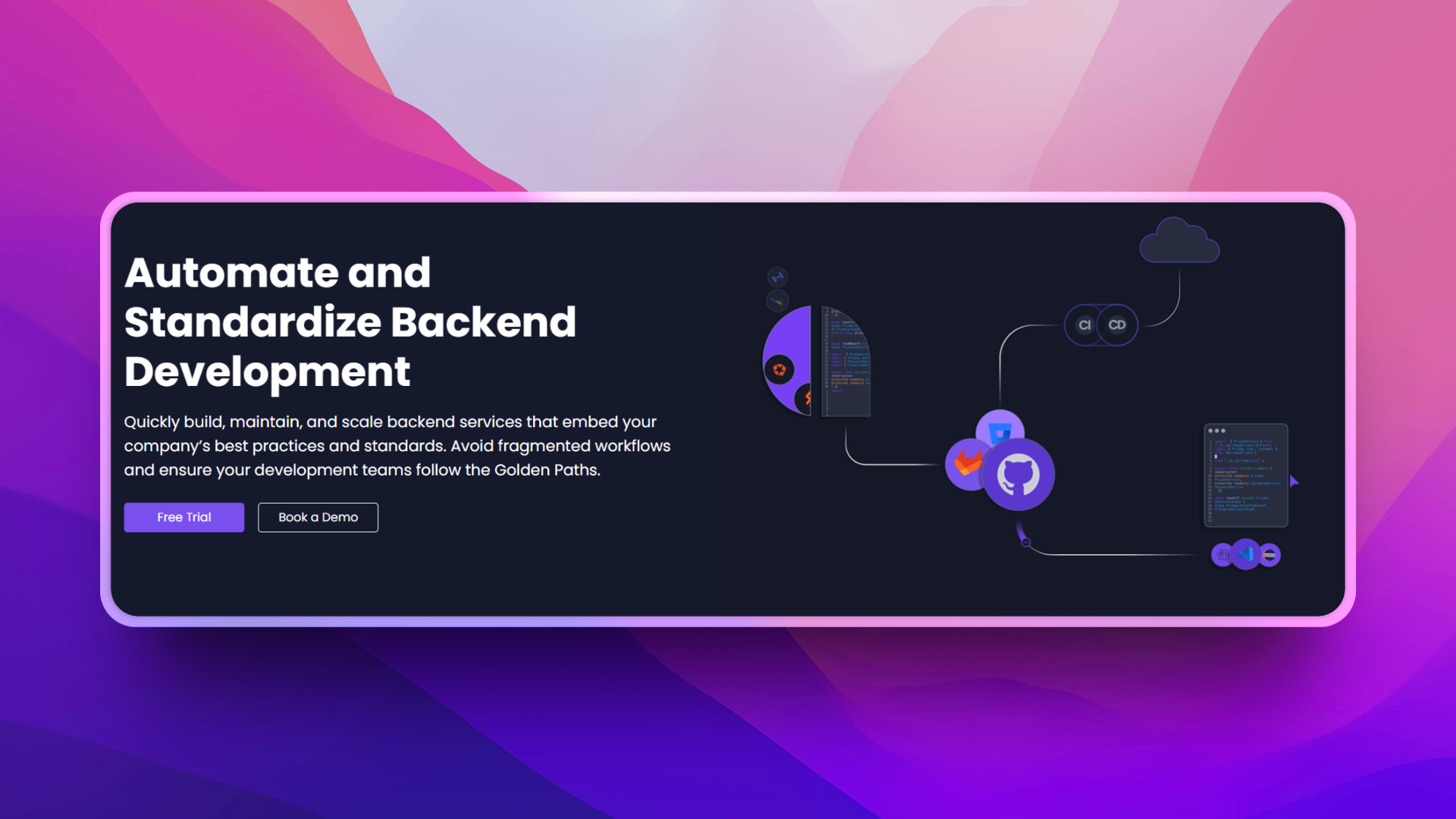
Amplication generates backend services with APIs, data models, and project structure from defined resources. It helps teams create consistent service foundations instead of starting every backend from scratch.
The project focuses on standardized development paths for teams, including templates and practices that keep generated services aligned with organizational conventions.
Amplication creates code developers can inspect and extend rather than locking the backend inside a hosted no-code runtime. That is useful for teams that need long-term ownership of generated services.
Features
- Backend service generation
- Golden path workflows
- Developer-owned generated code
Recommended for this setup
Strengths
- Reduces repeated backend scaffolding: Teams can standardize common service patterns once, then generate new projects faster. This is especially valuable when multiple squads create similar APIs and database-backed services.
- Better fit for engineering teams than no-code backends: Amplication targets developers who want generated code and platform standards. It avoids the main no-code backend tradeoff: speed at the cost of architectural control.
Trade-offs
- Maintenance-mode product status: Amplication's official site says it remains available for the community and existing customers while the team builds Overcut. New teams should validate roadmap, support, and migration expectations before choosing it as a strategic developer platform.
- Requires template governance: Code generation only helps if the templates stay current. Teams need owners for generated patterns, dependencies, security defaults, and upgrade paths.
- Apache-2.0 core with enterprise directory: Most of the project is Apache-2.0, while components under ee/ use Amplication Enterprise Edition terms. Teams should confirm whether required plugins or platform features live in the Apache-2.0 core or the enterprise directory.
Tech stack
FAQ
Amplication generates backend service code, APIs, and project structure based on defined models and organizational patterns. It is aimed at developers rather than non-technical no-code users.
Amplication can replace Xano when a team wants generated backend code and service standards instead of a hosted no-code backend. Xano is simpler for non-developers who want a managed backend runtime.
Amplication is mostly Apache-2.0, with enterprise-edition components under ee/ licensed separately. The official site now presents Amplication as available for community and existing customers while the team builds Overcut.
Amplication is available for community users and existing customers, but the official site presents it as maintenance mode while the team builds Overcut. Treat it as a useful code-generation project, not a fast-moving platform bet without current roadmap validation.