
Manifest
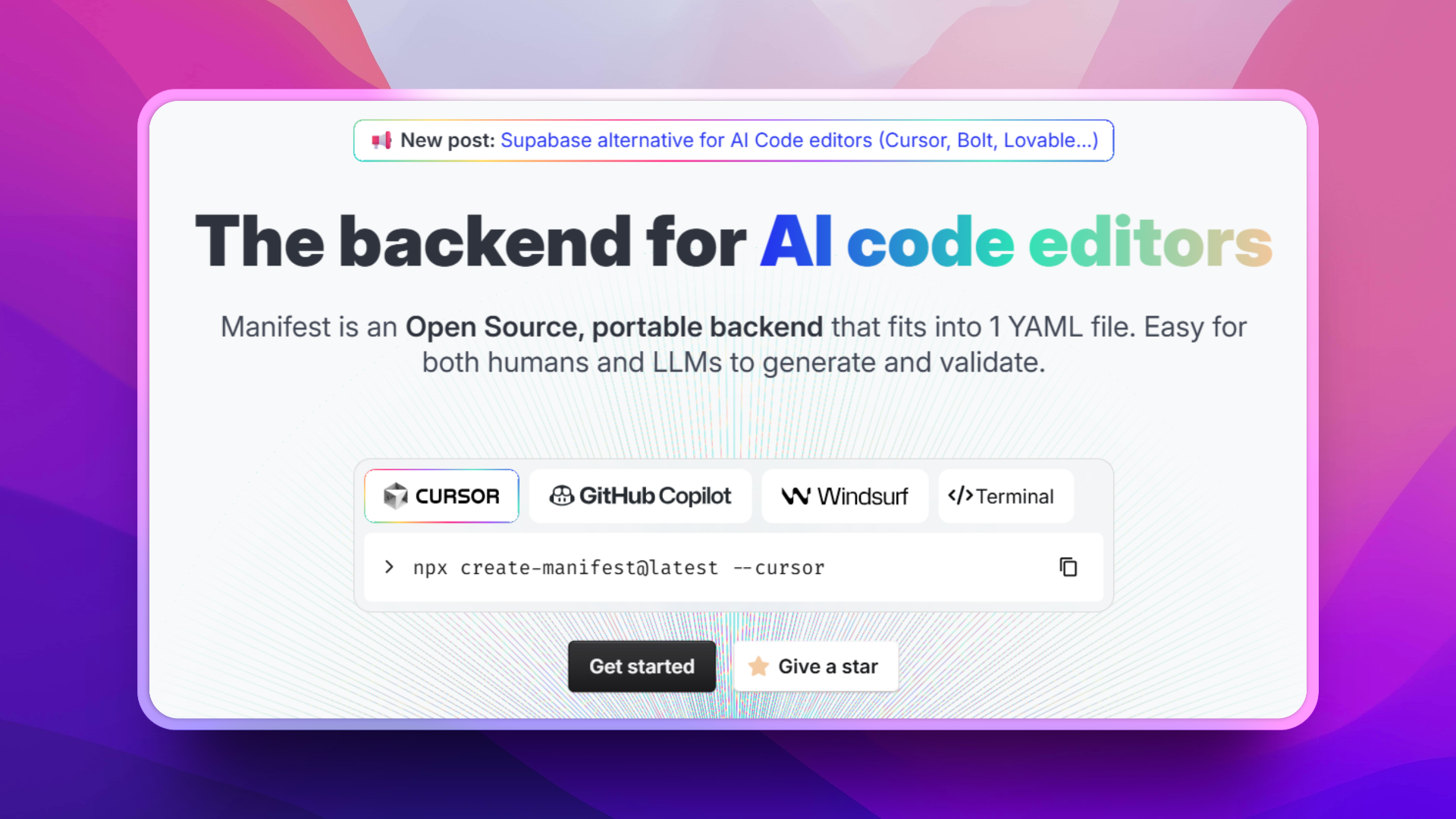
One YAML file gives your app auth, CRUD, storage, and admin UI
Replaces Xano, Firebase, Aws Amplify
Who it's for
Manifest helps teams route simple requests to cheaper models while preserving access to stronger models for complex work.
Use one provider directly if your app has low model volume and does not need routing, fallback, or cost controls.
Teams can put multiple model backends behind one gateway instead of wiring every agent to every provider separately.
Skip it if vendor-managed observability, enterprise SLAs, and a hosted AI gateway are required.
The problem
AI apps often start with one model API, then grow into a mix of premium models, cheaper fallbacks, local models, and subscription-backed providers. Without a routing layer, developers scatter provider logic across application code and lose visibility into cost, fallback behavior, and model selection. Managed AI gateways can solve routing, but they add another vendor to a sensitive part of the stack. Teams that already manage model keys and local inference may want a self-hosted control point instead.
How it works
Manifest routes each query to a model based on complexity, specificity, and custom HTTP headers, helping teams reserve expensive models for requests that need them.
The README documents API keys, paid subscriptions, local models, and custom OpenAI-compatible providers behind the same routing layer.
Manifest tracks spend and supports notifications and limits, giving teams a clearer view of LLM usage before bills grow.
The project ships as a Docker image with a one-command self-hosted installer and a local admin account created on first sign-up.
The GitHub repository reports MIT licensing, which is permissive for commercial and internal use.
Features
- Smart model routing
- Provider mix in one gateway
- Cost tracking and controls
- Self-hosted Docker deployment
- MIT license
How to install
bash <(curl -sSL https://raw.githubusercontent.com/mnfst/manifest/main/docker/install.sh)Recommended for this setup
Strengths
- Fast model-gateway setup: Manifest gives teams a routing layer without building provider selection, fallback behavior, and spend tracking from scratch.
- Useful for AI-assisted products: Agents and AI apps can route routine calls to cheaper models while keeping stronger models available for harder prompts.
- Keeps routing under team control: Self-hosting lets teams manage keys, provider choices, and model policy closer to their own infrastructure.
Trade-offs
- Routing quality needs tuning: A model router only helps if its policies match the product's quality bar. Teams should test routing decisions against real prompts before trusting cost savings.
- Provider limits still apply: Manifest can route across providers, but each upstream model API, subscription, or local runtime still has its own reliability, latency, and terms.
Tech stack
FAQ
Manifest routes AI requests across model providers, local models, and subscription-backed providers while tracking cost and fallback behavior.
Yes. Manifest ships as a Docker image and includes a self-hosted install script in the official README.
No. The current README says the legacy `manifest` npm package is deprecated and no longer published. The project now focuses on model routing for agents and AI applications.