
Rocket.Chat
Self-hosted team chat with voice, video, and omnichannel support
Replaces Microsoft Teams, Slack, Zoom Workplace, Discord
Who it's for
Run team messaging in infrastructure that can match internal retention, security, and access policies.
Your company already accepts Slack or Teams as the system of record.
Use Rocket.Chat when customer support, internal escalation, and operational chat need to live closer together.
You need a dedicated help desk more than a communications platform.
The problem
Team chat becomes part of the company memory, but hosted chat platforms put retention, exports, compliance, and integration boundaries under the vendor account. Regulated teams, support teams, and operational groups need messaging infrastructure they can govern more directly.
How it works
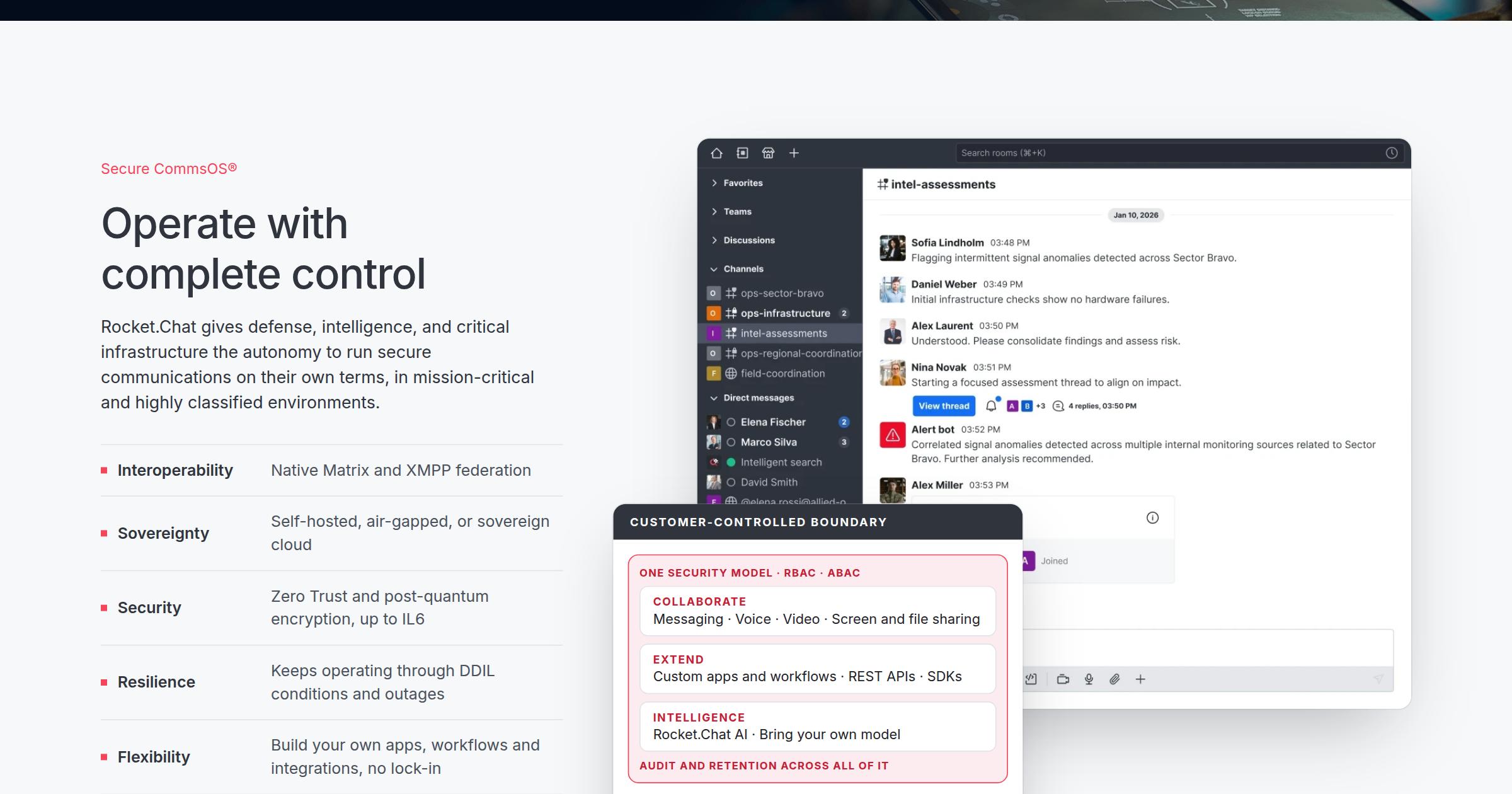
Rocket.Chat gives organizations a chat workspace they can run themselves instead of putting all conversation history into Slack or Teams.
The product is commonly used for internal messaging, support conversations, and workflow-connected communication.
Rocket.Chat positions itself around secure communications for mission-critical operations, making control and compliance central to the product frame.
Features
- Self-hosted team chat
- Operational and customer communication fit
- Security-centered positioning
Recommended for this setup
Strengths
- More ownership over conversation data: Rocket.Chat is useful when retention, deployment, and data access need to match internal policy rather than a shared SaaS default.
- Broader communications scope than simple chat: The support and omnichannel positioning makes it relevant for teams that need internal and customer-facing messaging in one stack.
Trade-offs
- Slack and Teams have stronger ecosystems: Slack and Microsoft Teams offer deeper app directories, enterprise defaults, and user familiarity.
- Self-hosted chat needs real operations: Search, notifications, mobile behavior, upgrades, storage, and uptime all need ownership when the team runs the platform itself.
Tech stack
FAQ
Rocket.Chat can replace Slack for organizations that value self-hosting, data control, and security-centered messaging. Slack is easier for teams that want the largest app ecosystem.
Rocket.Chat can replace Teams for chat-centric collaboration, especially when self-hosting matters. Teams remains stronger for companies standardized on Microsoft 365 meetings, files, and identity.
Yes. Rocket.Chat supports self-hosted deployment, but production setup should follow current official deployment documentation.