Kandev
Agent orchestration workbench with parallel worktrees and reviews.
Replaces Conductor
Who it's for
Teams with two or more developers each running their own agent sessions benefit from Kandev's shared kanban board, isolated worktrees, and centralized review queue. The plan-to-PR workflow keeps every task's context visible to the whole team, not just the person who started it.
Your team runs only one agent session at a time and reviews code directly in GitHub. The overhead of a separate workbench does not pay off at that scale.
Kandev's human-gated model lets solo developers define planning and review gates before changes merge, reducing the risk of accepting an agent's output without inspection. Session management and diff review remove the need to track what an agent did from terminal history.
You prefer quick, ad-hoc agent sessions without task-tracking overhead. Terminal agents with direct commit access are simpler when you review every change yourself in real time.
Organizations that relied on paid agentic platforms for multi-agent orchestration can self-host Kandev as a replacement. It covers parallel execution, review gates, MCP integration, and PR creation on your own infrastructure with no per-seat pricing.
Your organization needs a fully managed, vendor-supported platform with an enterprise SLA. Kandev is community-supported and self-hosted; there is no enterprise support tier.
Kandev's executor model supports SSH, Docker, Kubernetes, and Sprites cloud environments, letting you run compute-heavy agent sessions on a remote server while managing tasks from a laptop or phone. Executor profiles store credentials and settings for each environment.
Your agents run only on your local machine and you have no need for remote or container execution. The standard npx install handles local-only use without the extra configuration.
The problem
Running AI coding agents on a real codebase means context switching between terminal sessions, manually tracking what each agent was asked to do, and reviewing diffs in a separate git interface once the agent finishes. When you run more than one agent at a time, concurrent changes to the same files create conflicts, and the work of organizing what each agent should do next falls entirely on the developer. The review challenge runs deeper still. Agents can produce large diffs across many files, but there is no place to annotate specific lines, compare the before and after, and decide what merges before moving to the next task. Without a structured workspace, teams either slow down to review carefully in their editor or accept the risk of shipping changes they did not fully inspect.
How it works
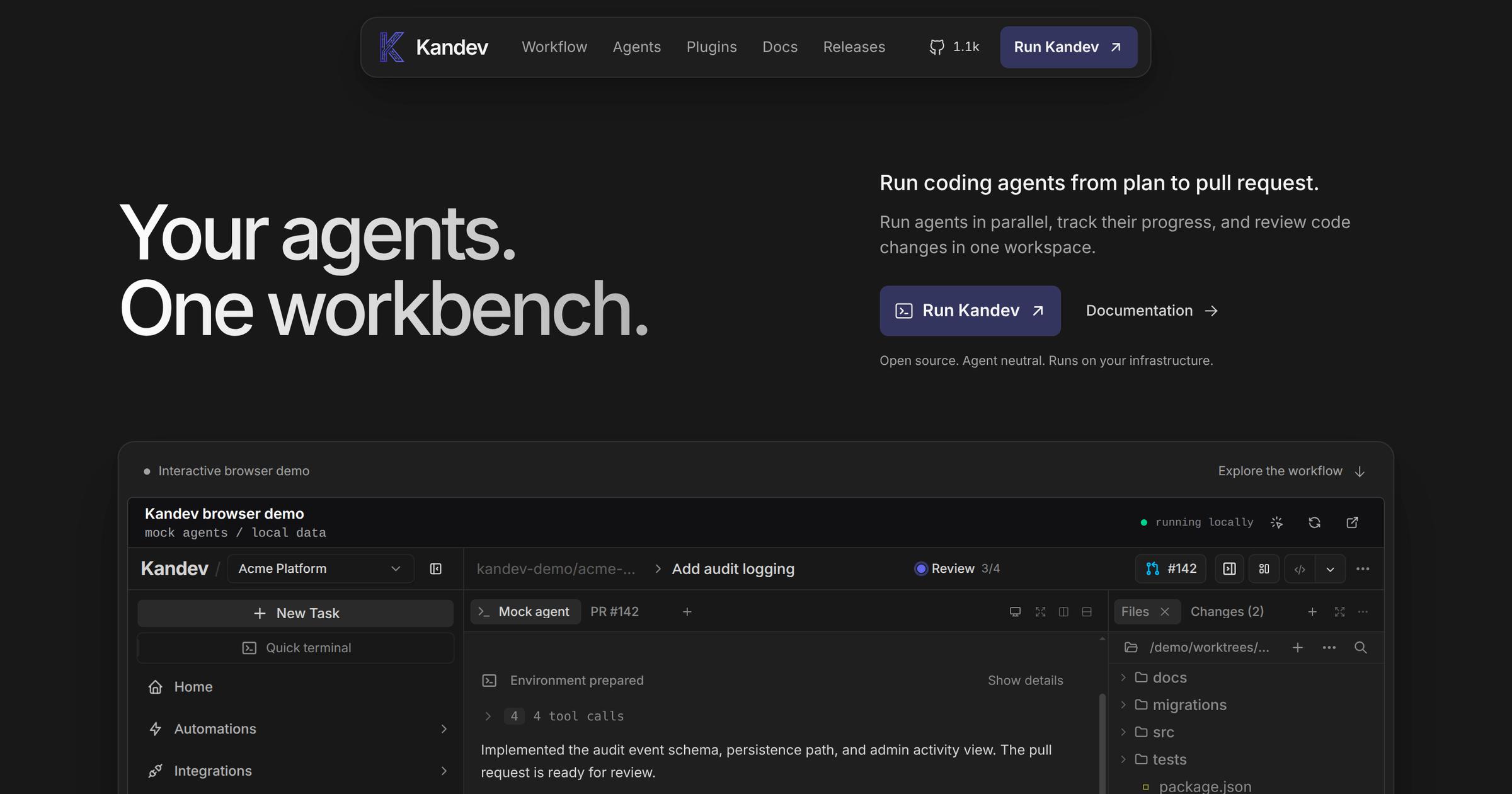
Each task gets its own git worktree, so multiple agents can work on the same repository at the same time without file conflicts. The kanban board tracks each task's status, plan, and agent session independently. Executors can be mixed across tasks: one on local, another in Docker, another via SSH.
Supports over 20 coding agent CLIs via ACP (Agent Client Protocol) and CLI passthrough mode, including Claude Code, Codex, GitHub Copilot, Gemini CLI, Amp, Cursor, Devin, Qwen, OpenCode, and Auggie. Teams can mix providers across workflow steps, assigning different models to plan, implement, and review stages.
After an agent finishes, review the diff in the same workspace without switching to a separate git tool. The plan, agent conversation, and code changes stay together on each task card. Leave feedback on specific changes, ask the agent to revise, and approve before the work moves forward.
Trigger agent tasks from schedules, webhooks, or external MCP calls. Multi-step workflows can assign different agents per step. Agents can spawn sub-tasks to split work that grows beyond a single session, producing multiple PRs from the same starting point. Workflow definitions export and import as portable YAML.
Run agents as local processes, inside Docker containers, on remote servers via SSH, in Kubernetes pods, or in Sprites cloud environments. Executor profiles store environment variables, credentials, and prepare scripts for reuse. Teams can assign private executor ownership to restrict compute access.
Install community plugins for Slack, Bitbucket, YouTrack, Redmine, and Forgejo from the plugin marketplace. Built-in integrations cover GitHub, GitLab, Jira, Linear, Sentry, and Azure DevOps for ticket import, PR linking, and review activity in the kanban board.
Features
- Parallel agent execution with isolated worktrees
- Multi-provider agent support
- Integrated diff review workspace
- Workflow automation and sub-tasks
- Flexible executors
- Plugin system and integrations
How to install
Install Kandev with Homebrew on macOS or Linux, or run it without a full install using npx.
brew install kdlbs/kandev/kandev
kandev
Recommended for this setup
Strengths
- No telemetry and full infrastructure ownership: The Go binary runs on your infrastructure without sending usage data to external services. Code, agent conversations, and task history stay on your machines. The AGPL-3.0 license means the source is inspectable and modifiable under those terms. No cloud account, no API keys to Kandev, and no seat pricing.
- Agent-neutral design across 20+ providers: Kandev connects to over 20 coding agent CLIs through ACP without being tied to any one provider's API or pricing. Teams can switch providers, mix models across workflow steps, or add a new agent without changing their task setup. Terminal-based agents without ACP support run in CLI passthrough mode inside a PTY terminal.
- Server-first architecture with remote access: The application runs as a server you can access from any device. Agents can run on remote machines over SSH, Docker, or Kubernetes while you manage tasks from a laptop or phone using Tailscale, a Cloudflare Tunnel, or a local network. This separates the control plane from the execution environment.
- Active development since January 2026: Kandev launched in January 2026 and reached 1,063 GitHub stars with 84 contributors and 4,318 commits to the default branch over its first 52 weeks. The project integrates new agent CLIs and executor types as they become available, with 176 forks indicating active community adoption.
Trade-offs
- 114 open issues on a young project: With 114 open issues and a project history starting in January 2026, Kandev is under active development and some workflows may change between releases. Teams depending on specific features or integrations should track the issue tracker and release notes before upgrading.
- AGPL-3.0 restricts managed service redistribution: Running Kandev internally for your own development workflow is permitted under AGPL-3.0, including internal commercial and team use. Organizations that intend to offer Kandev as a managed or hosted service to others must comply with AGPL-3.0's source-disclosure obligations for that service. Teams with strict open source license policies should review this before adopting.
- No managed cloud option: Kandev has no hosted SaaS tier. Operations, updates, and backups fall on the team running it. While the Homebrew and npx installs are fast, teams using Docker, Kubernetes, or remote SSH executors need infrastructure know-how. There is no vendor support contract or enterprise SLA.
Tech stack
FAQ
Kandev supports over 20 coding agent CLIs, including Claude Code, Codex, GitHub Copilot, Gemini CLI, Amp, Cursor, Devin, Qwen, OpenCode, Auggie, Kilocode, and AWS Kiro. Most integrations communicate via ACP (Agent Client Protocol). Any terminal-based agent CLI can also run in passthrough mode inside a PTY terminal, even without ACP support. See the GitHub README for the full agent table and install commands.
Yes. Kandev is AGPL-3.0 licensed and free to run on your own infrastructure. There is no paid tier, no seat pricing, and no telemetry. The license permits internal commercial and team use. Organizations that intend to offer Kandev as a managed or hosted service to others must comply with AGPL-3.0's source-disclosure obligations for that service.
Yes. Kandev supports macOS, Linux, and Windows (native or WSL). Install via Scoop on Windows by adding the kandev bucket first: `scoop bucket add kandev https://github.com/kdlbs/scoop-kandev` then `scoop install kandev`. On any platform with Node.js 7 or later, `npx kandev@latest` also works without a package manager install. The Homebrew tap is for macOS and Linux.
Kandev stores worktrees and its SQLite database in `~/.kandev` by default. All data stays on the machine where Kandev runs. No usage data, task content, or agent conversations are sent to external services. You can configure a different storage path through environment settings.
GitHub and GitLab connect directly for repository access, PR linking, and review activity. Jira, Linear, Sentry, and Azure DevOps connect through built-in integrations to pull tickets into the kanban board. Bitbucket is available through a community plugin from the plugin marketplace. Connect integrations from the Settings panel after installation.