
Sylius
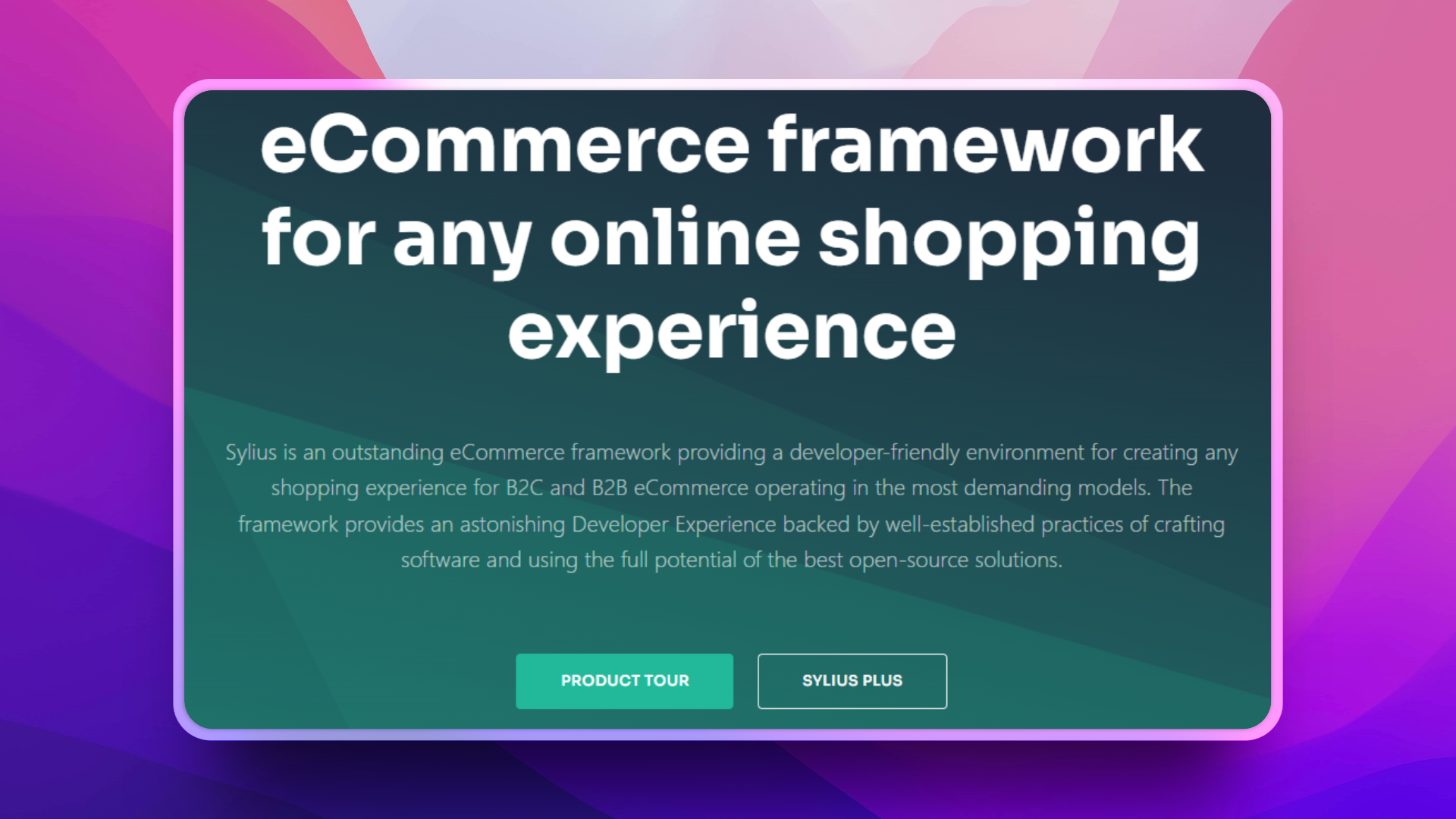
Headless Symfony commerce for complex B2B and B2C stores
Replaces Shopify, Adobe Commerce, Bigcommerce
Who it's for
Use Sylius when checkout, catalog, or integration requirements are too specific for Shopify-style platforms.
Skip if you need a simple hosted storefront with minimal development.
Sylius fits PHP agencies that want a structured ecommerce framework and plugin ecosystem.
Skip if your team is not comfortable maintaining Symfony applications.
The problem
Standard ecommerce platforms work until checkout, catalog, inventory, fulfillment, or integration rules become specific to the business. At that point, teams either fight platform constraints or build custom commerce logic around a system that was not designed for deep modification.
How it works
Built on Symfony, which gives PHP teams a familiar foundation for domain-specific commerce applications.
The README states that Sylius uses a REST API for integrations and customer experiences across devices, which helps developers connect commerce flows to custom frontends and services.
Sylius uses phpspec and Behat for behavior-driven development, reflecting a codebase aimed at serious custom projects.
Features
- Symfony-based ecommerce framework
- REST API for integrations
- BDD-oriented development culture
Recommended for this setup
Strengths
- Framework, not just a store app: Sylius is strongest when ecommerce needs custom domain modeling and integration work rather than a generic storefront.
- MIT license: The MIT license gives teams permissive commercial use for custom commerce builds.
Trade-offs
- Requires engineering ownership: Sylius is a framework for developers. A hosted store builder is faster for merchants who do not need custom commerce logic.
Tech stack
FAQ
Sylius is an open source ecommerce framework built on Symfony.
Yes. Sylius is MIT licensed.
Sylius can replace Shopify for custom, engineering-led commerce builds. Shopify remains better for merchants who want a managed storefront platform.