
WooCommerce
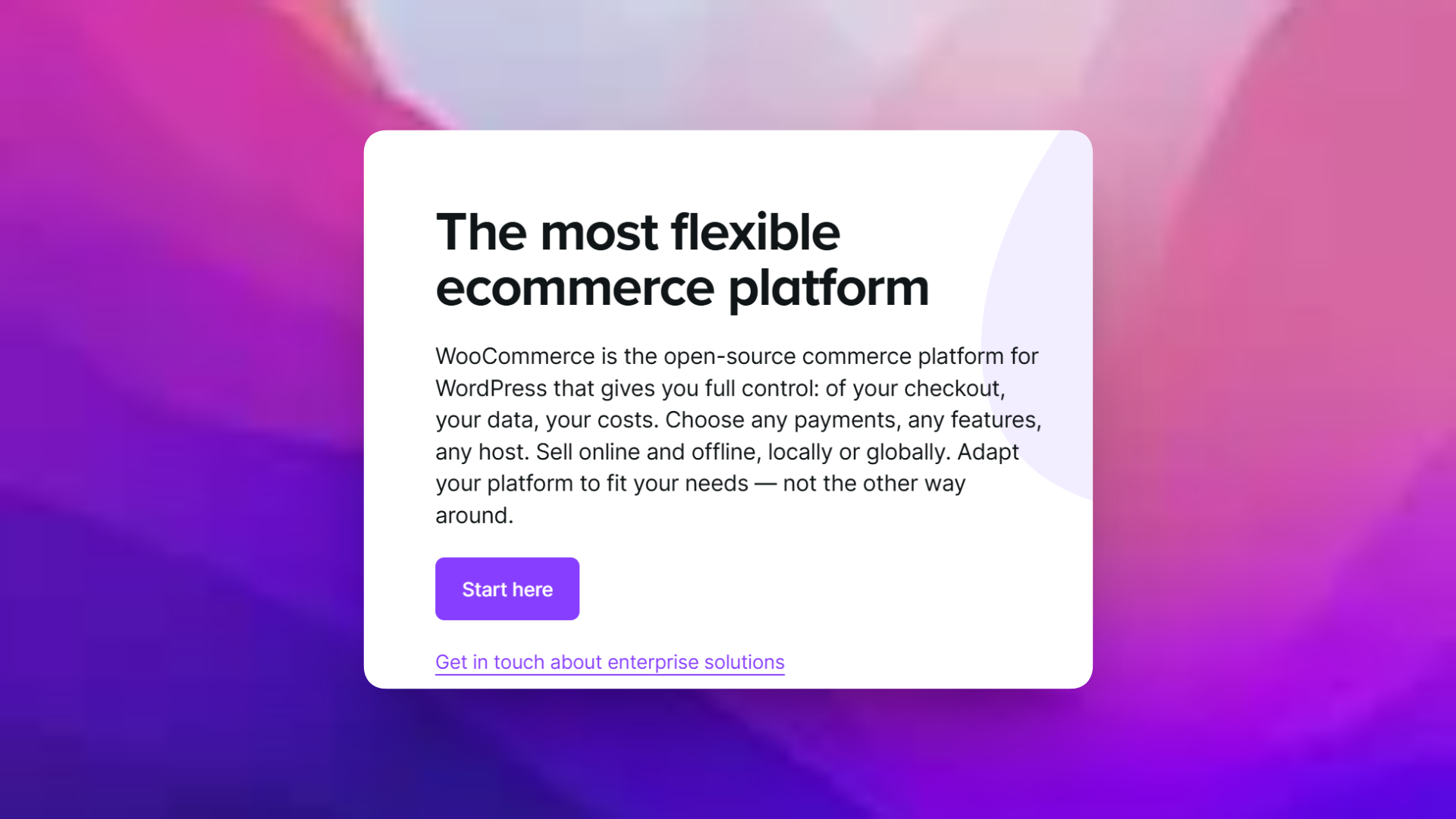
Open source WordPress eCommerce with full customization
Replaces Shopify, Bigcommerce, Adobe Commerce
Who it's for
WooCommerce fits publishers, creators, and small businesses that already use WordPress and want products and checkout without moving to a separate platform.
Skip if you want a hosted commerce platform where hosting, PCI scope, and most maintenance are abstracted away.
Agencies can extend WooCommerce with custom plugins and theme work while keeping clients on a familiar CMS.
Skip if the client needs enterprise commerce workflows with strict support SLAs from day one.
The problem
Hosted ecommerce platforms simplify the first store launch, but they also centralize themes, checkout behavior, app costs, and platform rules. Merchants that already publish on WordPress often end up maintaining a separate storefront, syncing content and customer data across systems, and paying extra for features that could live in their own site.
How it works
Adds ecommerce workflows to WordPress, including products, cart, checkout, and order management inside the same content system.
The monorepo contains core plugins, packages, and tools used for WooCommerce and extensions, which supports a large plugin ecosystem.
Developers can inspect source, build extensions, and adapt store behavior in PHP and JavaScript instead of being limited to hosted platform settings.
Features
- WordPress-native commerce
- Extension-based store model
- Developer-owned customization
Recommended for this setup
Strengths
- Best fit for WordPress stores: WooCommerce keeps publishing and commerce in one WordPress environment, which matters for content-led businesses and existing WordPress sites.
- No closed storefront runtime: Store owners can host the application themselves, choose their infrastructure, and modify the code path when a paid SaaS setting is too narrow.
Trade-offs
- WordPress operations are still your responsibility: Performance, updates, plugin compatibility, backups, and security all depend on the store owner or hosting provider. Shopify is easier for teams that do not want to manage WordPress.
Tech stack
FAQ
Yes. WooCommerce is developed in public, and its core plugin code is available through the WooCommerce GitHub monorepo.
Yes. WooCommerce is a WordPress ecommerce plugin, so it is a fit when WordPress is part of the stack.
WooCommerce is better when you want WordPress ownership and deep customization. Shopify is often better when you want a hosted storefront with less maintenance.