
Stack Auth
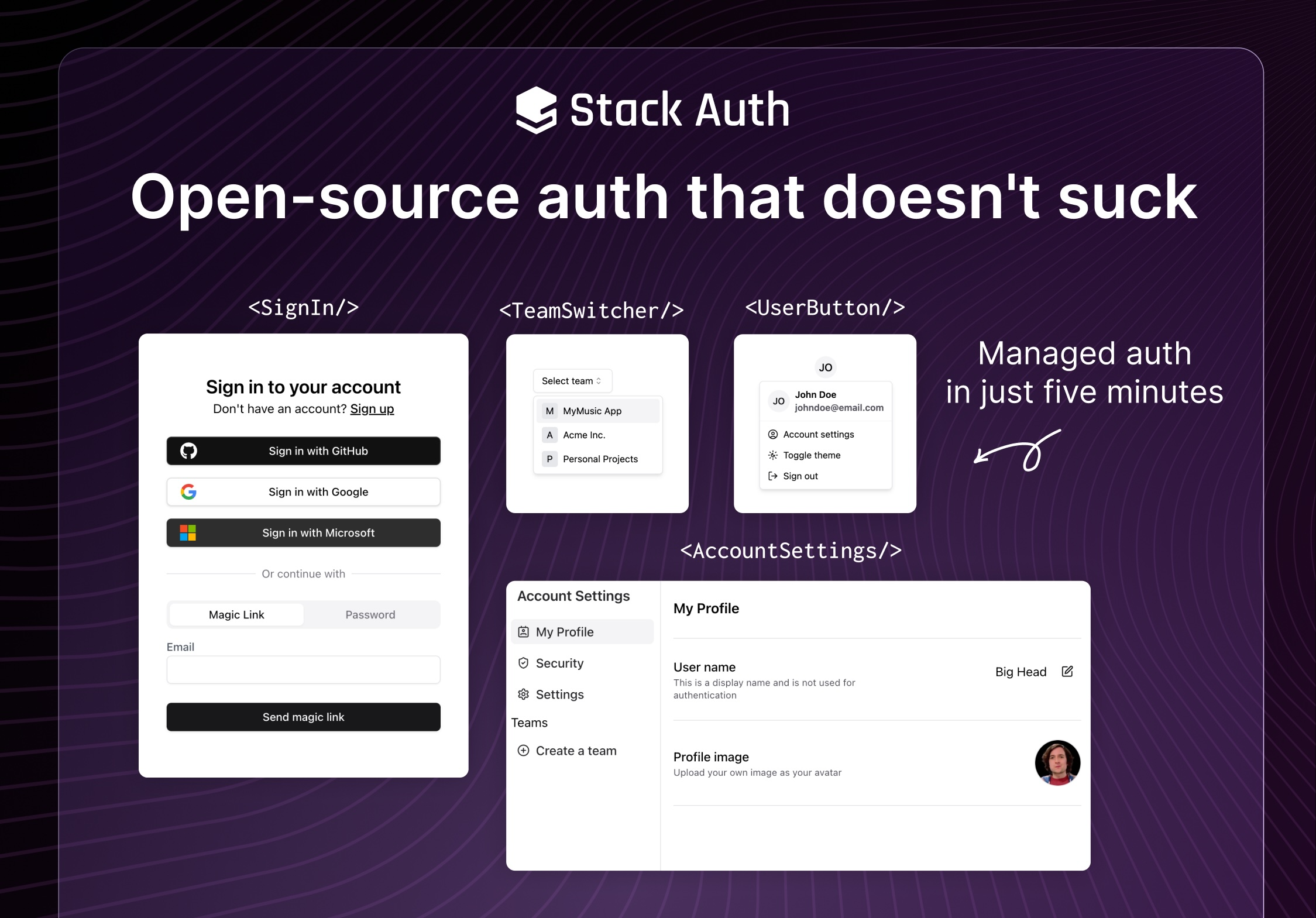
Stack Auth is an open-source authentication and user management tool for developers who want an Auth0 or Clerk alternative with self-hosting options. It focuses on quickly adding sign-up, sign-in, use
Replaces —
Who it's for
Stack Auth helps product teams add user accounts without building every auth flow themselves.
Use a managed identity provider if your team cannot maintain security-critical infrastructure.
Stack Auth gives teams a source-visible and self-hostable path for user management.
Skip it if you need mature enterprise IAM, advanced compliance tooling, or guaranteed vendor SLAs.
The problem
Authentication is risky to build from scratch, but managed auth vendors can become expensive and hard to leave once user records, sessions, and account flows live there. Product teams need fast auth integration, but they also need a path to own or inspect the system behind it. Open-source auth tools reduce vendor dependence, but auth remains security-critical. Teams must verify deployment, session handling, email flows, and compliance needs before production use.
How it works
Stack Auth provides authentication and user management building blocks, reducing the amount of custom account code teams need to write.
The project targets developers adding auth to apps quickly, with a product direction similar to Auth0 or Clerk alternatives.
The README says the managed service is optional and that teams can export user data and self-host, giving teams an ownership path beyond a managed-only auth vendor.
Stack Auth describes the project as fully open source and licensed under MIT and AGPL, with package-level license files defining the exact terms.
Features
- Auth and user management
- Developer-focused integration
- Self-hostable auth path
- MIT and AGPL licensing
Recommended for this setup
Strengths
- Faster than building auth alone: Stack Auth handles common account flows so product teams can avoid writing every login, registration, and user-management feature from scratch.
- More control than managed-only auth: Self-hosting gives teams a path to own sensitive user identity infrastructure instead of depending entirely on a proprietary account provider.
- Good fit for modern web apps: Stack Auth is aimed at current app developers rather than legacy identity administration, making it attractive for startups shipping product auth.
Trade-offs
- Security responsibility increases when self-hosted: If you self-host auth, you own updates, email delivery, session configuration, secrets, logs, and incident response. That responsibility is serious.
- Enterprise identity needs may exceed scope: Large organizations needing mature SSO governance, compliance reporting, and vendor support should validate Stack Auth carefully before replacing an established identity provider.
Tech stack
FAQ
Stack Auth can replace parts of Auth0, Clerk, or custom authentication code for teams that want open-source auth and user management.
Yes. Stack Auth says its managed service is optional and that teams can export user data and self-host. Teams should review the official deployment docs before using it for production auth.
It can be production-oriented, but auth is security-critical. Review deployment docs, update cadence, session settings, email delivery, and compliance needs before switching.