
OpenStatus
OpenStatus is an open source uptime monitoring and status page platform. It replaces paid services like Statuspage, Better Stack, or Pingdom when teams want checks, incidents, subscribers, and monitor
Replaces —
Who it's for
OpenStatus fits teams that need uptime checks and public incident communication without buying a separate status-page product.
Skip if a managed monitoring vendor already covers checks, on-call, incidents, and status pages well.
Use it when monitor definitions should live in Git, Terraform, or CI workflows.
Skip if nontechnical operators need only a dashboard-based setup.
The problem
Status pages and uptime monitors often live in separate SaaS tools with separate billing, member limits, and configuration drift. Teams need to detect outages, notify the right people, communicate incidents publicly, and keep configuration reviewable without paying per seat or wiring multiple tools together.
How it works
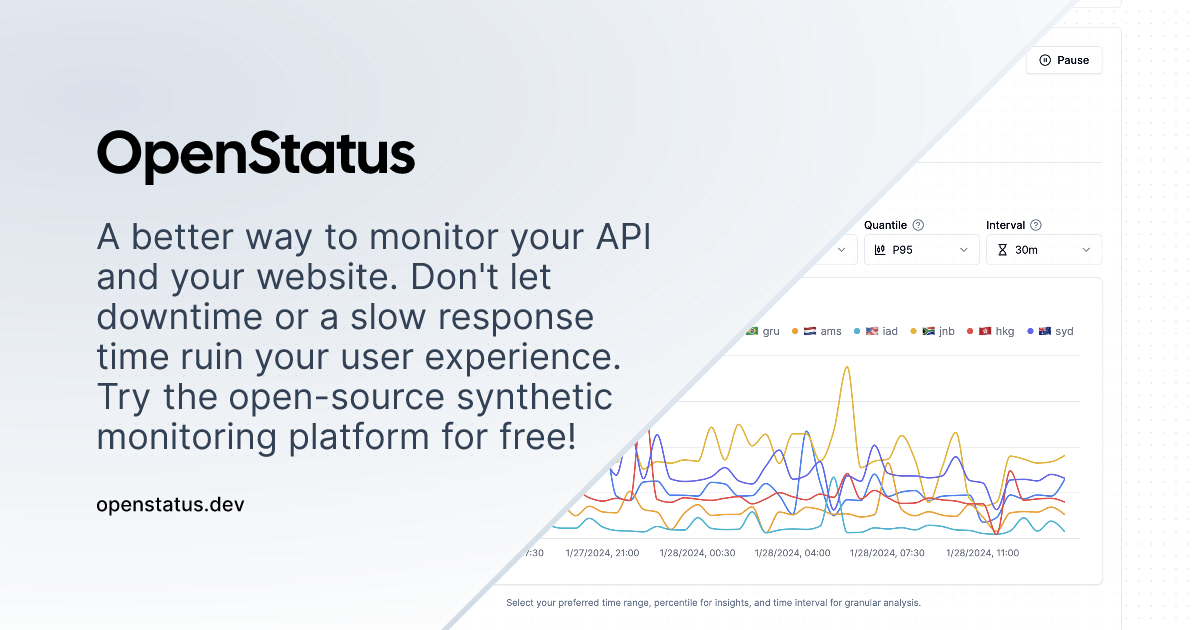
Combines uptime monitoring and public status pages in one platform, reducing the need for separate tools.
The README describes checks from 28 global regions across 3 cloud providers plus notifications through Slack, Discord, PagerDuty, email, and more.
Supports YAML config, CLI, GitHub Actions, and Terraform workflows so monitor changes can be reviewed like code.
Features
- Monitoring plus status pages
- Global checks and notifications
- Monitoring as code
How to install
cp .env.docker.example .env.docker
docker compose up -d
Recommended for this setup
Strengths
- Incident communication built in: Status pages, custom domains, maintenance windows, subscriber notifications, RSS, and webhooks are part of the product scope.
- AGPL-3.0 self-hosted path: Teams can run OpenStatus themselves and avoid per-seat or per-subscriber billing models.
Trade-offs
- Self-hosting a monitor needs external perspective: If the monitor runs only inside the same failed infrastructure, it may miss outages. Operators should plan external checks or managed regions carefully.
Tech stack
FAQ
OpenStatus combines uptime monitoring and status pages in one open source platform.
Yes. The README describes a self-hostable AGPL-3.0 platform and includes Docker Compose development commands.
It can replace Statuspage-style public communication when you also want integrated monitoring and self-hosting. Atlassian Statuspage may still fit teams already standardized on Atlassian managed tools.