
Open Wearables
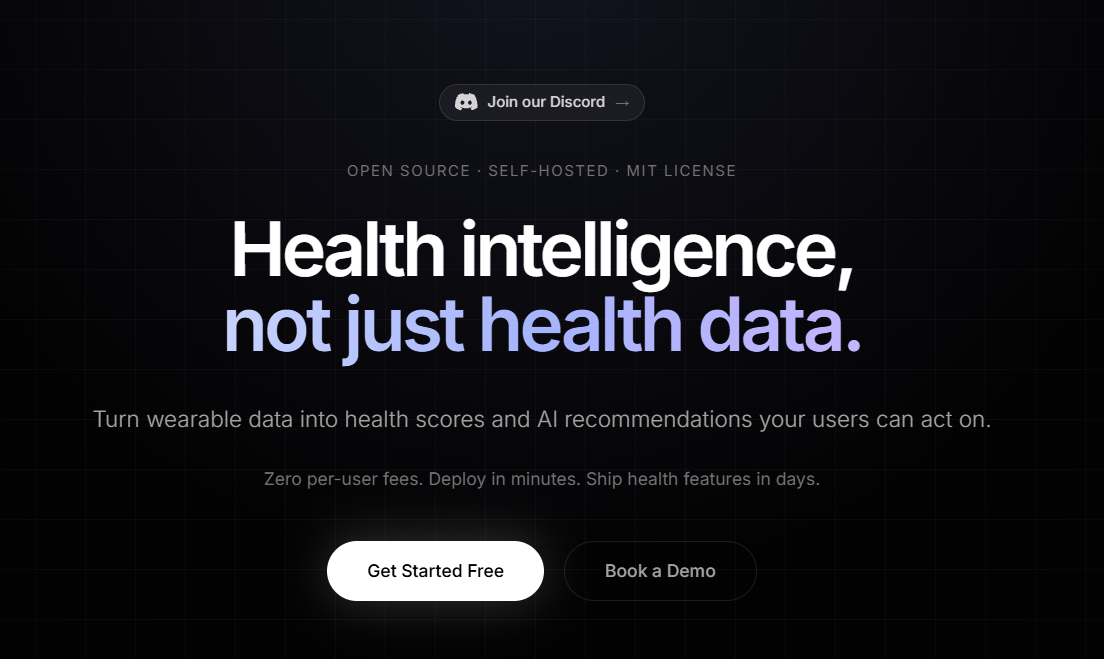
Open source health API for wearable device developers
Replaces Human Api, Validic
Who it's for
Use Open Wearables when your app needs a single API over wearable data from multiple providers.
Your product only supports one wearable provider with a mature first-party API.
Use Open Wearables to normalize sleep, activity, and fitness data before building natural-language or automation features.
You cannot meet the privacy, consent, and compliance requirements around health data.
The problem
Wearable data is fragmented across device vendors, mobile ecosystems, and provider APIs. Developers building health, fitness, or quantified-self apps have to implement each integration separately before they can even start working on product logic. That fragmentation gets worse when AI features need normalized data. Sleep, activity, heart rate, and workout fields need consistent structure before they are useful for insights, notifications, or user-facing automation.
How it works
Provides one API over multiple wearable and fitness data sources, reducing the need to build separate Garmin, Whoop, Apple Health, or Suunto integrations.
Includes developer-facing surfaces and embeddable widgets so health apps can connect users and display synced data more quickly.
Positions normalized wearable data for natural-language automations and health insights, which helps teams building AI features on top of fitness streams.
Features
- Unified wearable data API
- Developer portal and widgets
- AI-ready health data
Recommended for this setup
Strengths
- Reduces integration sprawl: Open Wearables gives developers one self-hosted layer for multiple wearable providers instead of a separate connector per device ecosystem.
- Self-hosted health data control: Health data is sensitive. A self-hosted path helps teams reason about data handling and retention before adding AI or analytics features.
Trade-offs
- Provider coverage must match your users: Open Wearables is useful only if its supported device and provider integrations cover the wearables your audience actually uses.
Tech stack
FAQ
Open Wearables is a self-hosted tool that unifies wearable health data through one API for health and fitness applications.
The official source references providers such as Garmin, Whoop, Apple Health, and Suunto as examples of the integrations it aims to unify.
Open Wearables fits developers building health apps, quantified-self tools, or AI health workflows that need normalized data from multiple wearable sources.