
Botpress
Visual chatbot builder with LLM integration and live deployment
Replaces Voiceflow, Google Vertex Ai Agent Builder, Microsoft Copilot Studio, Kore Ai
Who it's for
Botpress fits teams designing customer support or internal assistants with reusable flows and integrations.
Skip if your bot is only a simple FAQ widget that a hosted helpdesk already covers.
The open repository and integration model help teams avoid locking all assistant logic into a proprietary design surface.
Skip if your company requires a fully managed enterprise vendor and does not want to run or inspect bot infrastructure.
The problem
Customer support and internal assistant projects often start in a managed bot builder, then hit limits around custom logic, channels, retrieval, handoff, and deployment control. Teams need a way to design conversations visually while still giving developers access to code, integrations, and versioned behavior. The risk is vendor lock-in. If the bot builder owns the runtime, data paths, and integration layer, the assistant becomes hard to move once it handles real support or operations workflows.
How it works
Botpress provides a builder for conversational flows so teams can design bot behavior without encoding every path as custom application code.
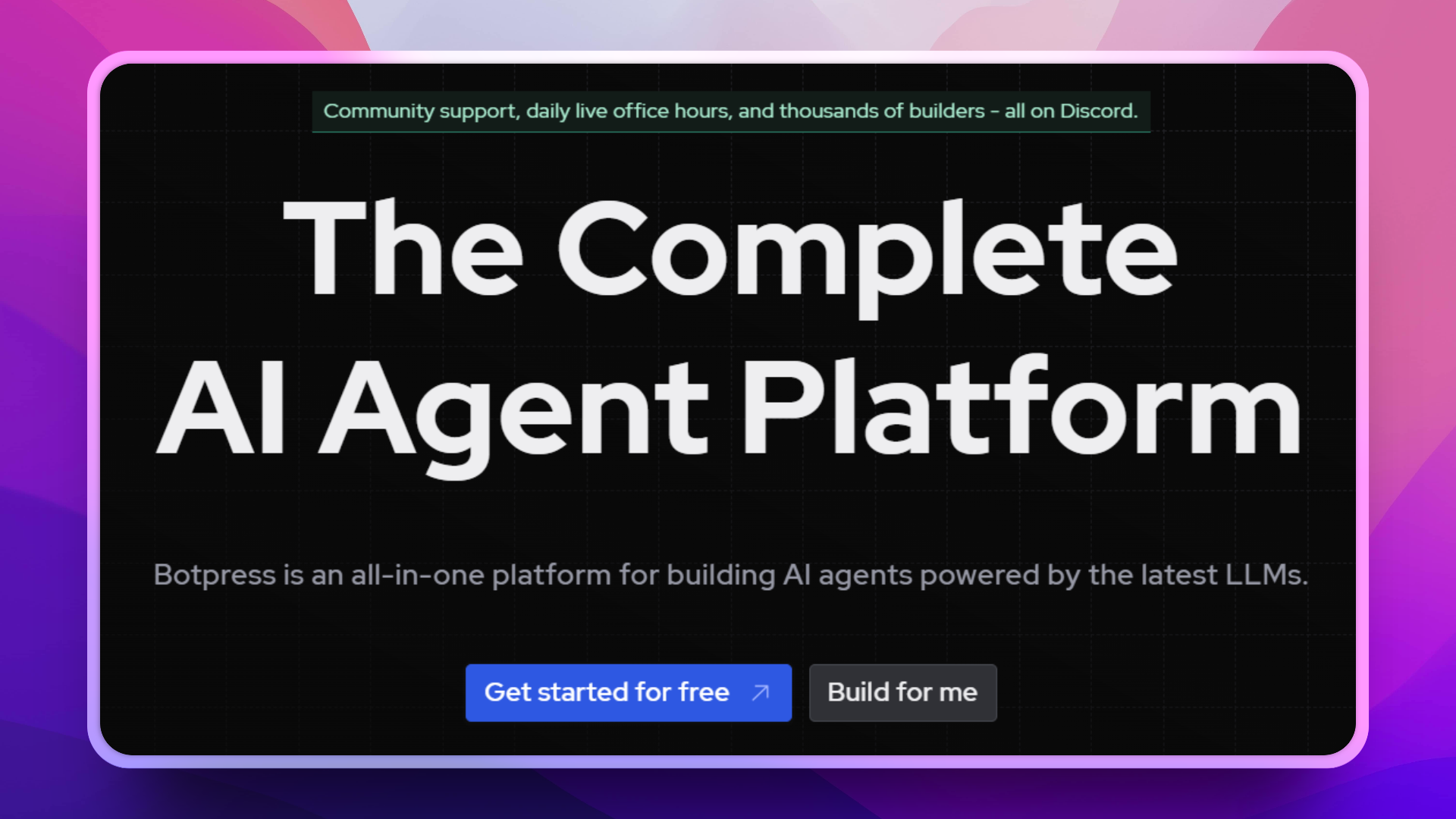
The platform is positioned around modern GPT and LLM agents rather than only rule-based chatbot scripts.
Botpress supports connecting agents to channels and business systems so assistants can act inside existing workflows.
The official botpress/botpress repository lists MIT licensing for packages in the project.
Features
- Visual agent builder
- LLM-oriented agent workflows
- Integration ecosystem
- Open source repository
Recommended for this setup
Strengths
- Better developer control than closed bot builders: Botpress gives technical teams more room to inspect and extend assistant behavior than proprietary-only chatbot design tools.
- Visual plus code workflow: Non-developers can participate in conversation design while developers handle integrations, actions, and deployment details.
Trade-offs
- Product boundaries can vary by deployment: Botpress has evolved across major versions, so teams should confirm which features belong to open source packages, Botpress Cloud, or commercial plans before adoption.
- AI agents still need production governance: Visual flows help teams design assistants, but production bots still need testing, fallback handling, prompt controls, and integration monitoring.
Tech stack
FAQ
Yes. The botpress/botpress repository lists MIT licensing for packages in the project, with commercial cloud offerings available separately.
Botpress can replace Voiceflow for teams that want a visual AI agent builder with more code and deployment control. Voiceflow remains attractive for managed prototyping and design-led teams.
Yes. Botpress is designed for developer-involved assistant builds, including integrations, actions, and deployment logic around visual conversation flows.