TDengine
High-performance time-series database for IoT and telemetry
Replaces Influxdb Cloud, Timescale Cloud
Who it's for
TDengine fits plants, device fleets, and monitoring systems that ingest large volumes of time-stamped measurements.
Your data is mostly business transactions or document records; PostgreSQL or another general database is a better default.
Self-managed deployments help keep operational metrics close to machines and local networks.
You prefer a fully managed SaaS time-series database and do not have local data-control requirements.
The problem
Industrial telemetry creates data patterns that general databases handle poorly: millions of time-stamped points, many devices, retention rules, downsampling, and queries over recent windows. Teams often end up stitching together brokers, ETL jobs, and analytics databases before they can answer basic operational questions. Managed time-series services reduce operations work, but they can introduce data residency concerns and recurring cost surprises when sensor volume grows. Plants, utilities, and edge deployments often need time-series storage close to the equipment, not only in a cloud account.
How it works
TDengine centers ingestion, storage, and query behavior around timestamped metrics rather than treating telemetry as ordinary relational rows.
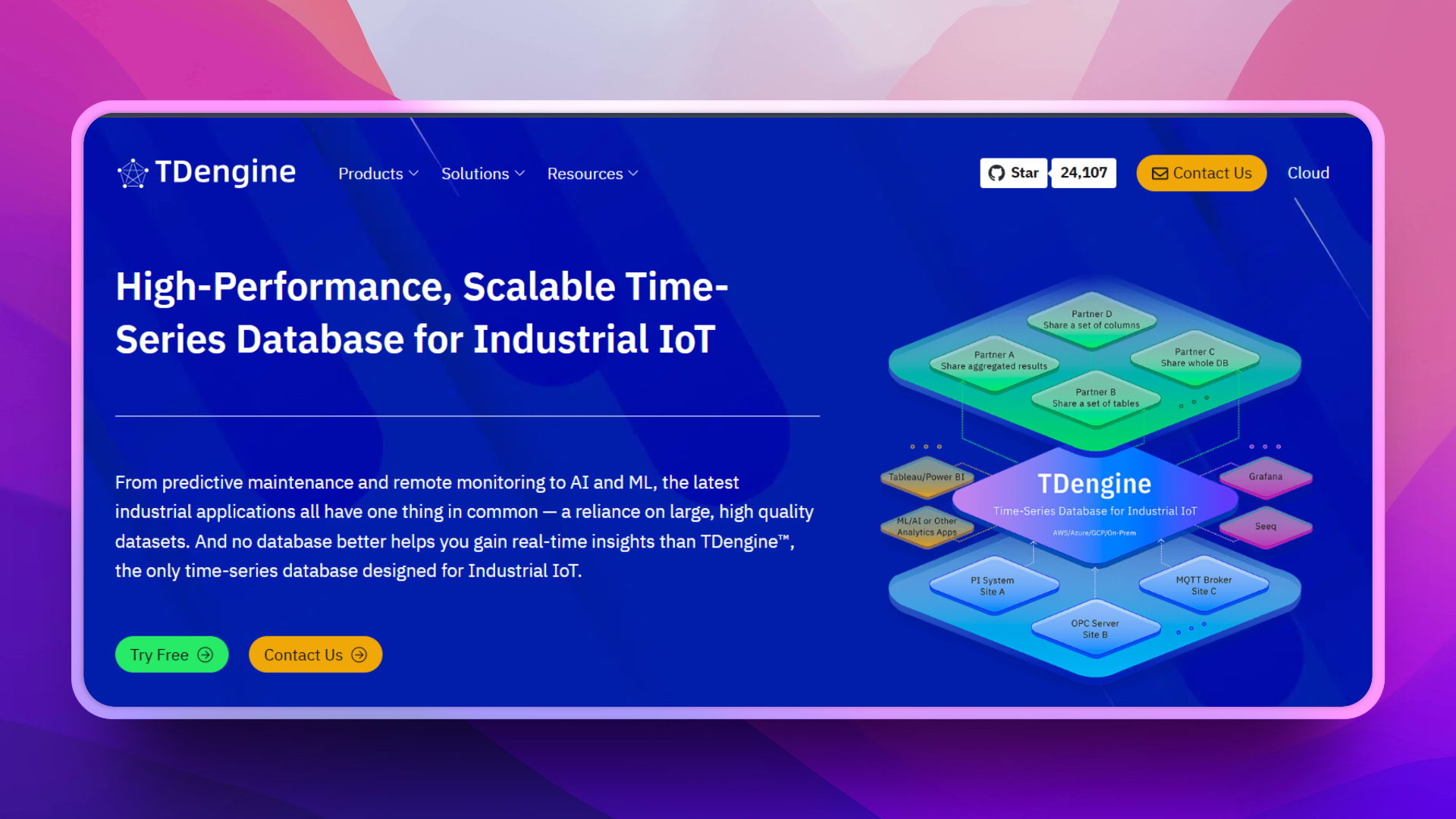
The project documents use cases around sensors, connected devices, and operational monitoring, which makes it more specialized than a generic analytics database.
Teams can query time-series data through SQL-style interfaces instead of forcing every analyst into a custom telemetry query language.
TDengine supports self-managed deployments for teams that need data close to devices, with commercial cloud options available separately.
Features
- Time-series database engine
- Industrial IoT positioning
- SQL-oriented access
- Edge and cloud deployment paths
Recommended for this setup
Strengths
- Purpose-built for telemetry volume: TDengine focuses on high-ingest time-series workloads, which is a clearer fit for sensor fleets than bolting telemetry tables onto a general OLTP database.
- Open source core for data control: The AGPL-3.0 repository gives infrastructure teams a self-managed path when operational data cannot leave a site or region.
Trade-offs
- Specialized operational surface: TDengine is not a general PostgreSQL replacement. Teams need time-series expertise and must validate connector support, retention design, and backup procedures for their environment.
- AGPL-3.0 obligations: Organizations modifying and offering the software over a network should review AGPL requirements before embedding TDengine into a commercial service.
Tech stack
FAQ
TDengine is used for time-series data, especially industrial IoT telemetry, sensor measurements, device monitoring, and operational analytics.
Yes. TDengine is available under the AGPL-3.0 license, with commercial offerings available from TDengine's vendor.
TDengine is not a general relational database replacement. It is a specialized time-series database for timestamped telemetry workloads.