
Soketi
Self-hosted Pusher-compatible WebSocket server, open source
Replaces Pusher, Ably, Pubnub
Who it's for
Use Soketi when an app already uses Pusher-compatible clients and message volume makes hosted pricing unattractive.
You want a globally managed real-time network with vendor SLAs and no infrastructure ownership.
Use Soketi when private channels, presence, and WebSocket events are needed without inventing a custom protocol.
Your app only needs occasional server-sent updates that could be handled by polling or server-sent events.
The problem
Real-time app features can become expensive when every message and connection passes through a hosted WebSocket vendor. Live dashboards, notifications, chat, collaboration, and presence features all create steady traffic that grows with product usage. Building custom WebSocket infrastructure from scratch is also risky. Teams need authentication, channels, horizontal scaling, and client SDK compatibility without spending months maintaining a bespoke messaging layer.
How it works
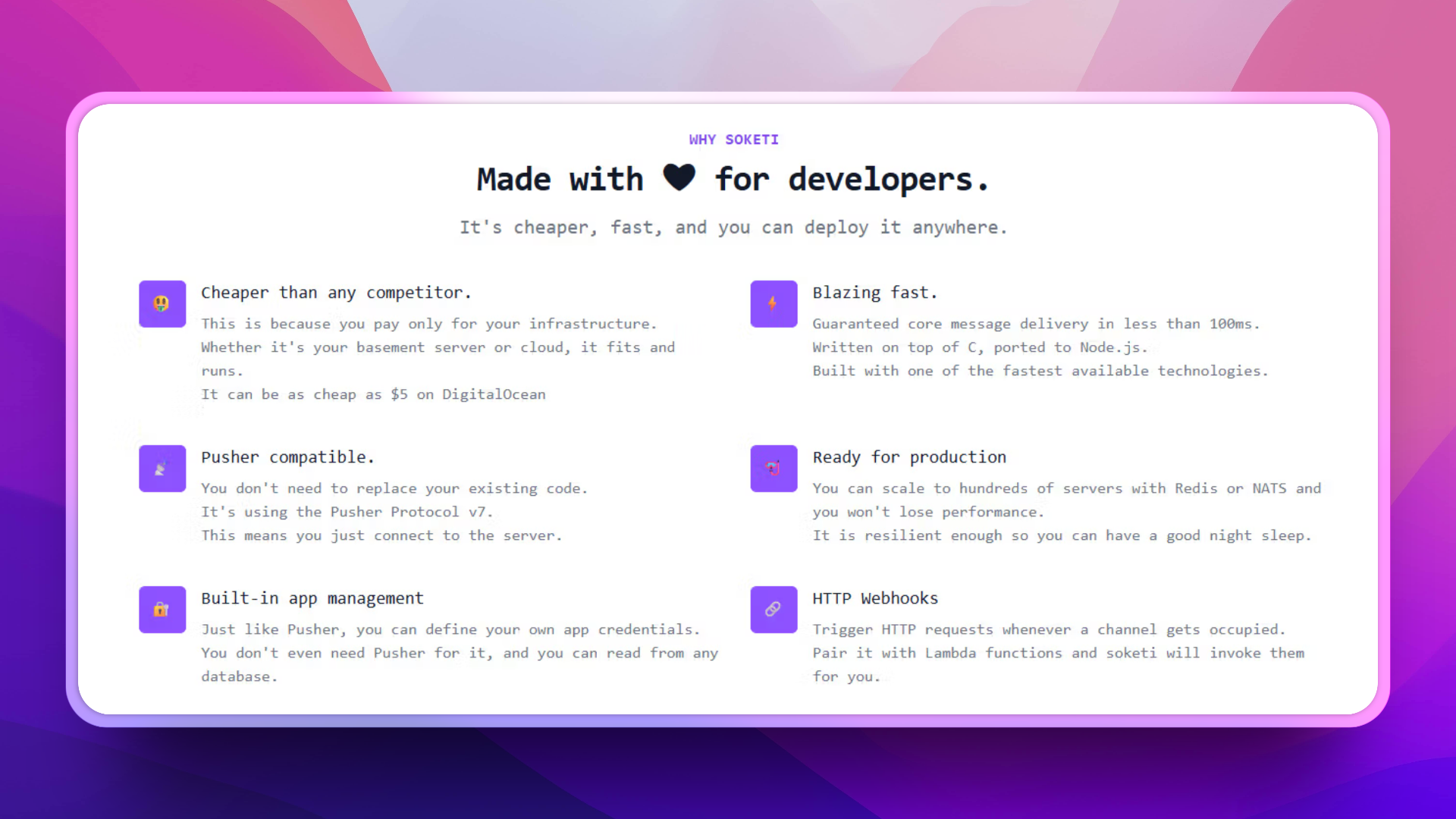
Soketi implements the Pusher Channels protocol, so existing Pusher-compatible clients can connect by changing configuration rather than rewriting the application messaging layer.
Support for authenticated private channels and presence channels lets teams build real-time collaboration and user-status features with familiar Pusher-style semantics.
Soketi can scale across instances with Redis, giving production teams a path beyond a single WebSocket process.
Features
- Pusher protocol compatibility
- Private and presence channels
- Redis-backed horizontal scaling
Recommended for this setup
Strengths
- Lower migration friction from Pusher: Protocol compatibility makes Soketi practical for teams already using Pusher clients and server APIs who want to move traffic onto their own infrastructure.
- Real-time control without vendor message pricing: Self-hosting removes third-party per-message limits and gives teams direct control over capacity, networking, and data flow.
Trade-offs
- Infrastructure ownership is required: Soketi replaces a managed service with software your team must operate. Scaling, Redis, TLS, deployment, monitoring, and incident response become internal responsibilities.
Tech stack
FAQ
Soketi is a self-hosted WebSocket server that implements the Pusher Channels protocol for real-time pub/sub messaging.
Yes. Soketi can replace Pusher Channels for teams that want compatible real-time messaging on their own infrastructure.
Soketi documents Redis-backed scaling for multi-instance deployments, but teams must operate that infrastructure themselves.