
Languine
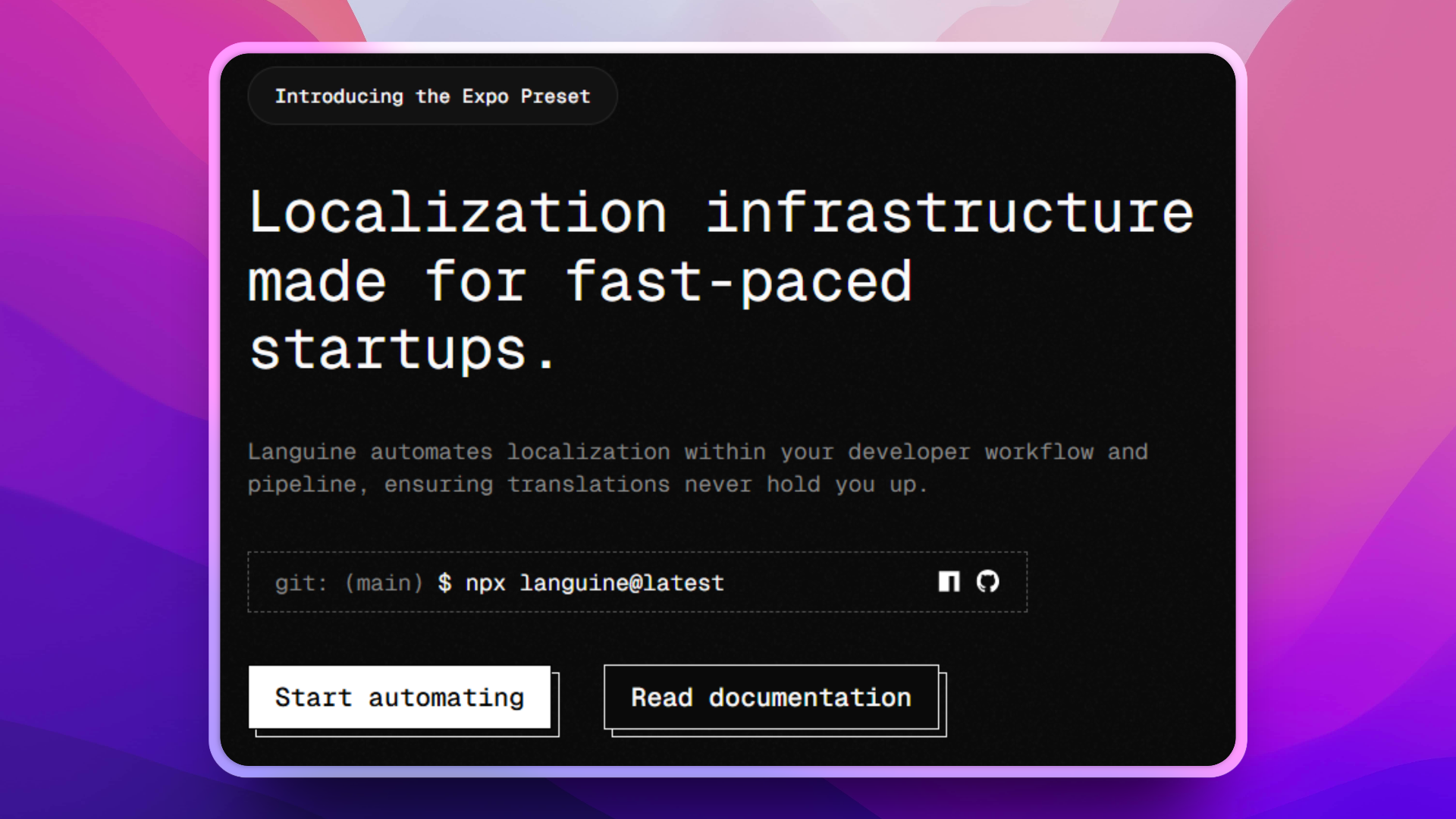
Keep translations in sync with code changes via AI-powered CLI
Replaces Phrase, Lokalise, Transifex
Who it's for
Use Languine when developers need to update translation files as UI strings change in the repository.
Your localization process requires professional translators, translation memory, and formal approval workflows for every string.
Use Languine to get initial translations and CI-friendly sync before investing in a larger localization management suite.
Your product already has a mature enterprise localization stack with vendor-managed translation operations.
The problem
Localization often breaks because translations live behind code changes. Developers add strings, product teams wait on manual translation updates, and stale locale files ship missing or inconsistent copy. Hosted localization tools help coordinate work, but they can add another account, workflow, and pricing layer around files that still need to land back in the repository. Developer teams need i18n automation that fits CI/CD and source control.
How it works
Runs from the command line with npx, letting teams translate and sync application strings close to the codebase.
The project provides a Vercel-native self-hosted app with a Postgres-backed setup, so teams can operate localization infrastructure in their own account.
Uses an AI model configuration to help translate changed strings, reducing the manual pass needed for routine UI copy updates.
Features
- CLI-based translation workflow
- Self-hosted web app
- AI-assisted locale updates
Recommended for this setup
Strengths
- Fits developer i18n workflows: Languine keeps localization close to code and CI rather than forcing every translation update through a separate hosted dashboard.
- One-click deployment path: The official README documents a Vercel deployment flow with Postgres provisioning, making it easier to try than a fully custom localization service.
Trade-offs
- AI output needs review: AI translations can drift in tone, product vocabulary, or legal meaning. Teams should keep human review for important product, support, and compliance copy.
Tech stack
FAQ
Languine is used to translate application strings and keep localization files in sync through a CLI and self-hosted app.
Yes. The official source describes a Vercel-native self-hosted deployment with a Postgres-backed setup.
No. Languine can speed up routine translation updates, but teams should still review important copy for accuracy, tone, and product language.